 Brighter Green


-
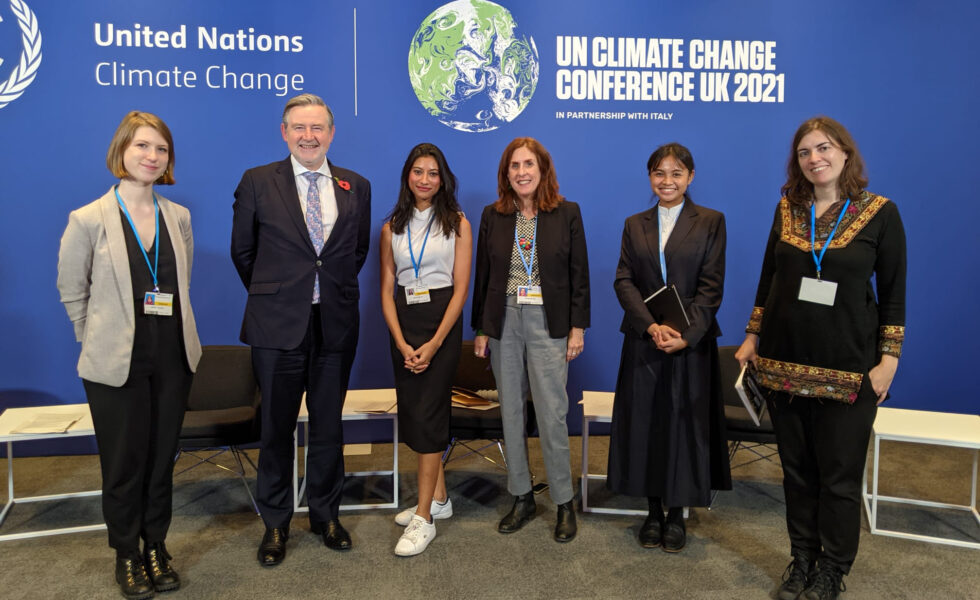
COP26: Glasgow, Scotland
Brighter Green Official Side Event
-

Food Forward
2019 United States Forum
-
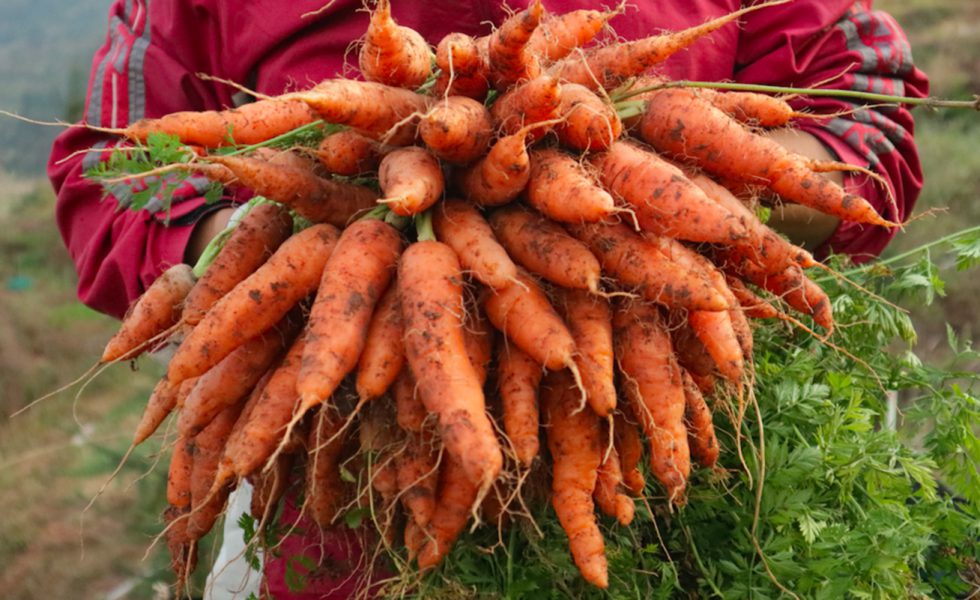
Discussion Paper
Fast-changing Food Environments and Public Health
What's New
Webinar on April 4th | Unveiling Colombia’s Livestock Nexus: Political Power & its Ecological Fallout | EN/ES | Webinar

Register now! http://tiny.cc/colombia24
When: Apr 4, 2024| 10 to 11:30 Colombia time | 3 PM GMT
Interpretation: Spanish and English
Join Brighter Green and partners for ‘Unveiling Colombia’s Livestock Nexus: Political Power & Its Ecological Fallout’, a webinar where we reveal the findings of two investigative reports on ‘Livestock Laundering’ in Colombia, supported by Brighter Green’s biodiversity and animal protection reporting fund, along with a research study on “sustainable” livestock intensification and financing.
The reports, by Enrique Gamboa of Revista Raya, expose the effects of livestock expansion on forests, biodiversity, and Indigenous Peoples. The first article, set in Guaviare province in the Colombian Amazon, exposes how paramilitary groups spurred livestock expansion, leading to deforestation and biodiversity loss, impacting the Nukak—Colombia’s last nomadic indigenous group. The second piece delves into paramilitary influence in buffalo cattle ranching expansion in Santander province in the Colombian Andes. An English translation of the report by Isis Alvarez is available here, and a short documentary film on the issue is available here.
In addition, we’ll discuss a study on a livestock project financed by the Green Climate Fund (GCF) in the department of Vichada, which promotes sustainable intensification; this project claims to be “carbon-negative” for thousands of head of cattle. There are concerns raised by the indigenous Sikuani people and its impacts on forests, communities and climate.
SPEAKERS
- Moderator: Isis Alvarez, Brighter Green
- Enrique Gamboa | Revista Raya
- Anarley Hoyos, Jaime León | Corporación Claretiana Norman Pérez Bello
- Jaider Camacho | Sikuani Indigenous governor
- Andrea Echeverri | Global Forest Coalition
REPORTS
- Deforestation and Cattle Ranching: A Paramilitary Marriage in the Colombian Amazon (Spanish)
- Deforestation and Cattle Ranching: A Paramilitary Marriage in the Colombian Amazon (English)
- Unsustainable Livestock Farming: Killing Ecosystems, Laundering Money—the Toto Ariza Case (Spanish)
- Unsustainable Livestock Farming: Killing Ecosystems, Laundering Money—the Toto Ariza Case (English)
- Examining “Sustainable” Livestock Intensification and Financing: A Critical Analysis of the Hacienda San José Case in Colombia
Recent News
Read Our End-of-Year Newsletter on COP28
Our end-of-year newsletter about COP28 is now available. Learn what Brighter Green did, and how food was on the agenda (finally) in the efforts to confront the climate crisis.
When Brighter Green first began attending UN climate “COP” summits in 2009 in Copenhagen, we faced a basic dilemma. When we raised the issue of animal agriculture or food, most responses we got from government negotiators, the staff of technical agencies, journalists, and even other NGOs were blank stares or a version of “Oh, so you want me to be a vegetarian?” Well, sure, but that question missed the point by many degrees. What we were drawing attention to was the fact that industrial animal agriculture needed to be part of mainstream climate policy because of the significant greenhouse gases (GHGs) it emits, along with its exploitation of domesticated animals as well as wild ones, forests, water, land, and far too many human communities, often on the frontlines of the climate emergency. That era, finally, is over and COP28 proved it, and we’re pleased that Brighter Green has played a part in this progress.
Click here for more.
December 20, 2023Brighter Green at COP28 in Dubai
 Brighter Green is attending the United Nations’ twenty-eighth Conference of the Parties (COP), to be held between November 30 and December 12, 2023, in Dubai, United Arab Emirates.
Brighter Green Associates at the Africa Animal Welfare Conference, Rwanda
Brighter Green supported the participation of our colleagues Charles Ssekyewa from Uganda, Judy Muriithi from Kenya, and South African Tozie Zofuka, executive director of CAAWO, at the Seventh Africa Animal Welfare Conference in Kigali, Rwanda, in September 2023.
November 16, 2023
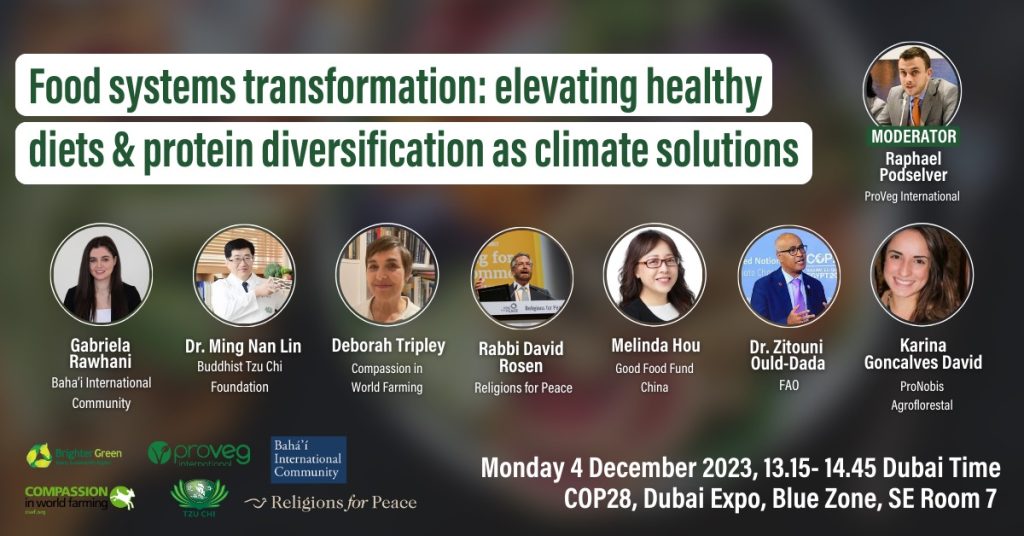
Food Systems Transformation
As part of its engagement at COP28, Brighter Green is co-hosting an official side event, entitled “Food Systems Transformation: Elevating Healthy Diets and Protein Diversification as Climate Solutions.” On the panel will be representatives and colleagues from the following partner organizations: ProVeg International, the Buddhist Tzu Chi Organization, Compassion In World Farming, the World Conference of Religions for Peace, and the National Spiritual Assembly of the Bahai of the U.S. The side event will be on Monday December 4, 1:15–2:45 pm local time, in SE Room 7 in the Blue Zone. To watch this side event (and all other side events at COP) click here.
Recent Events
Watch: Ecological Justice and the Right to Health Virtual Panel
Watch the panel! Brighter Green and partners hosted a virtual event that explored making changes in our society, and indeed our world, to help people, animals, and the planet be healthy and thrive. Learn More
April 27, 2022No More Omissions: Addressing the Ambition & Scale of Change Required in Global Food Systems
This event was live streamed on November 9, 2021 at COP26 in Glasgow Scotland.
Brighter Green participated in an official COP26 side event called, No More Omissions: Addressing the Ambition and Scale of Change Required in Global Food Systems.
You can watch the event in the embedded player below, or on YouTube.
November 3, 2021A Global Dialogue Across Borders: Best practices – and bold visions – for ensuring sustainable, climate friendly food is equitable and accessible, and the essential role of international cooperation and youth activism in bringing this about
Food and agricultural systems have an enormous impact on human lives, especially in vulnerable communities, the lives of other animals, and the ecosystems and climate on which all species depend.
Learn More
Our Mission
Brighter Green is a public policy action tank that works to raise awareness of and encourage policy action on issues that span the environment, animals, and sustainability. Based in New York, Brighter Green works in the U.S. and internationally with a focus on the countries of the global South and a strong commitment to ensuring and expanding equity and rights.
On its own and in partnership with other organizations and individuals, Brighter Green generates and incubates research and project initiatives that are both visionary and practical. It produces publications, websites, documentary films, and programs to illuminate public debate among policy-makers, activists, communities, influential leaders, and the media, with the goal of social transformation at local and international levels.
The Asia Program
Linking activists and organizations from across Asia and other parts of the world, the Asia Program focuses on the development of sustainable food systems through knowledge exchange and public education. Our work focuses on China, but we are expanding to countries across the continent. We have produced documentaries, published policy papers, organized speaking tours, and hosted conferences to foster critical, collaborative engagement on climate change and food systems across Asia.
Global Factory Farming
Intensive animal agriculture constitutes one of the greatest contributors to climate change. In an effort to expand awareness of the negative effects of factory farming, Brighter Green has produced policy papers, briefs, and short documentary videos that examine the globalization of factory farming through the lens of climate change, with a focus on the Global South.
International Climate Advocacy
Brighter Green collaborates with organizations from all over the world to bring attention to climate change and sustainable development. Through our International Climate Advocacy program, we empower individuals and groups to work together to resist deforestation, cope with erratic rainfall, and foster adaptation and resilience to climate change by creating paths to sustainable development.
Vegan America Project
Combining writing, presentation, and research, the Vegan America Project uses veganism as a lens through which to examine complex issues related to climate change. This project focuses on food security, animal welfare, and social transformation, and considers how the United States might reimagine food systems in the Anthropocene.